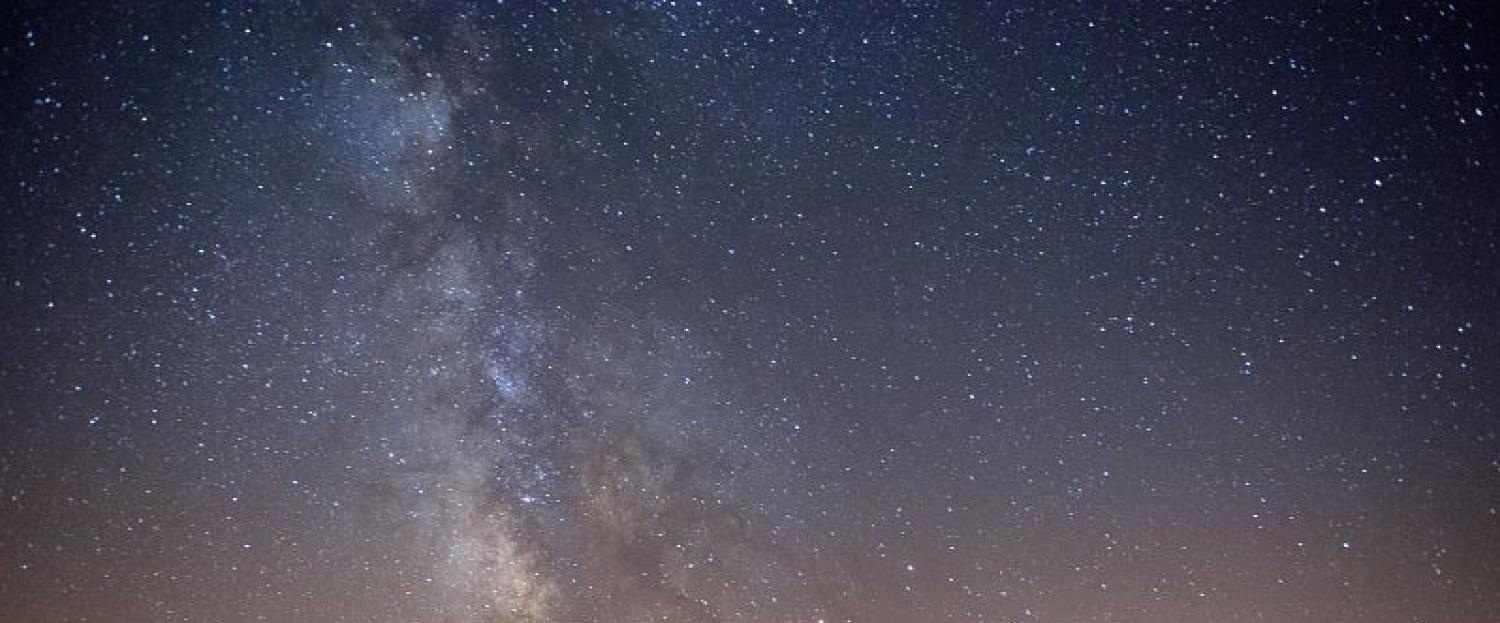
A starry sky for your astronomy evenings in Provence

Provence by day,
the universe at nightfall

Pack your binoculars, refractor or small telescope. At Domaine la Boucharde, round off your holiday days with a journey through the night sky, just a short walk from the country house.

A place to take the time to look at the sky

A country house to relax in, a field to set up your instrument and a whole evening ahead of you: the estate is a wonderful place for a holiday with your astronomy equipment.

Above the valley

At an altitude of 385 m above the valley, the estate is more than 6 km from the nearest town centre. The hill of the Saint-Michel castrum screens the direct lights of Trets, the nearest town: an advantage for enjoying the Provençal night.

Room for your equipment

A field allows you to set up comfortably, a few dozen metres from the country house. Bring your tripod, a chair and your instrument: spend the evening observing, then walk back to your accommodation.

Four recommended directions

The Arc valley lies to the northwest. For observing, favour the sectors to the east, southeast, south and southwest. Here you can follow constellations and deep-sky objects as they move across the sky.

A small instrument, big discoveries

You do not need heavy equipment on holiday! 7 × 50 or 10 × 50 binoculars already open up the world of star clusters. A 70–100 mm refractor or a 100–150 mm telescope lets you explore further, especially double stars and bright nebulae. A tripod makes binocular observing more comfortable.

Bring a dim red torch, a sky chart that works offline and warm clothing, even in summer. Allow about twenty minutes for your eyes to adapt to the darkness and start at low magnification.

The eight suggestions for each season are a guide for Provence, rather than a programme for a single evening. Directions are approximate and change with the date and time: a sky chart will help you choose when objects pass through the recommended sectors. Through the eyepiece, galaxies and nebulae usually appear as faint grey glows.

March · April · May

Spring — clusters, double stars and galaxies

From Cancer to Leo, then towards Virgo and Hercules, the spring sky offers a mix of easy discoveries and small challenges. For galaxies, wait for a clear, moonless night.

South to southwest · early evening

1. The Beehive Cluster — M44

In Cancer, a broad swarm of stars looks magnificent through 10 × 50 binoculars. An ideal target in March and April, best enjoyed at low magnification.

South to southwest · March and April

2. The M67 cluster

Also in Cancer, this more compact cluster appears as a small patch through binoculars. An 80–100 mm refractor or a 130 mm telescope reveals more stars.

Southeast to south · evening

3. Algieba — a double in Leo

A beautiful pair of golden stars. An 80–100 mm refractor, at about 80–120 times magnification, can separate them when the atmosphere is steady.

Southeast to south · March to May

4. The galaxies M65 and M66

Look for two members of the Leo Triplet with a 130–150 mm telescope. Under a clear sky, they appear as two small, elongated glows; the third member is harder to see.

Southeast to South · April and May

5. Porrima — a double in Virgo

Two stars of similar brightness form an attractive pair. Try a 100 mm refractor or a 130 mm telescope at medium to high magnification; their separation also depends on their orbital motion.

South to southwest · April and May

6. The Sombrero Galaxy — M104

A small challenge above Corvus: a 130–150 mm telescope can reveal a faint, elongated shape with a brighter centre. Its famous dark dust lane remains difficult to see with this equipment.

East to southeast · later in the evening

7. The globular cluster M3

Between Boötes and Canes Venatici, look for a small, diffuse ball with 10 × 50 binoculars. A 100–150 mm telescope brings out its bright core; April and May are best.

East · late evening in May

8. The Great Hercules Cluster — M13

A taste of summer: this cluster is visible in binoculars and becomes more prominent in a 100–150 mm telescope. Wait for Hercules to rise in the east for a better view.

June · July · August

Summer — the Milky Way through binoculars

The evenings grow longer, and the treasures of Sagittarius appear in the south.

Southeast to south · July and August

1. The Milky Way in Sagittarius

With the naked eye, then with 10 × 50 binoculars, explore the star clouds above the Sagittarius “teapot”. A moonless night turns this stroll into a real journey.

South · around meridian transit

2. The Lagoon Nebula — M8

This region of Sagittarius combines a star cluster and a nebula. Binoculars mainly show the cluster and a glow; an 80–100 mm refractor or a 130 mm telescope helps reveal the gas.

Southeast to south · July and August

3. The globular cluster M22

A beautiful cluster in Sagittarius, visible as a fuzzy ball through 10 × 50 binoculars. A 130–150 mm telescope may begin to reveal stars around its edges in favourable conditions.

Southeast to south · July and August

4. The star cloud M24

Explore this particularly rich star field with binoculars or a small refractor at very low magnification. Take time to sweep across this window onto the Milky Way.

Southeast to south · evening

5. The Wild Duck Cluster — M11

In Scutum, a compact patch seen through binoculars becomes a splendid scattering of stars in a 100–150 mm telescope. A very rewarding target for a small instrument.

East to southeast · early to middle of the night

6. Albiréo — two colors in Cygnus

A golden star and a bluish companion: a small 70 mm refractor is usually enough to separate this pair at low or medium magnification. A classic to share with the family.

East to southeast · first part of the night

7. The Coathanger — Collinder 399

In Vulpecula, this pattern of stars resembles an upside-down coat hanger. 7 × 50 or 10 × 50 binoculars provide the ideal wide field to recognise its outline.

East to southeast · July and August

8. The Dumbbell Nebula — M27

A planetary nebula within reach of an 80–100 mm refractor or a 100–150 mm telescope. Look for a small, pale shape; a moonless sky makes its outline easier to see.

September · October · November

Autumn — from Pegasus to the first winter stars

The Great Square of Pegasus takes its place in the evening sky. Some targets, such as Andromeda, rise in the northeast: wait until they are higher in the east or southeast to observe them in the recommended sectors.

East to southeast, high in the sky · later in the evening

1. The Andromeda Galaxy — M31

10 × 50 binoculars show its core as an elongated glow. A small wide-field refractor lets you explore further, although you will not see the colours shown in photographs.

Southeast to south · evening

2. The Pegasus cluster — M15

A compact globular cluster, visible through binoculars as a small patch. An 80–100 mm refractor or a 130 mm telescope brings out its very bright centre.

Southeast to South · September and October

3. The globular cluster M2

In Aquarius, another small ball of stars to compare with M15. Binoculars can pick it out; a 100–150 mm telescope makes its shape clearer.

Southeast to south · evening

4. The Great Square of Pegasus

Identify the four stars of this large autumn landmark with the naked eye. Then compare the stars visible inside the square: an enjoyable exercise in learning to read the sky.

East to southeast · October and November, later in the evening

5. Almach — a double in Andromeda

A golden component and a bluish companion, separable with a 70–100 mm refractor at moderate magnification. Wait until it moves out of the northeast sector.

South to southwest · September and October

6. The double star 61 Cygni

Two orange-tinted stars within reach of a small 70–100 mm refractor. Observe them as Cygnus descends through the southwest, before it reaches the west.

East to southeast · late evening in October and November

7. The Pleiades — M45

The first winter stars return. This small group is recognisable with the naked eye; 10 × 50 binoculars reveal many more stars in a field better suited to the cluster than high magnification.

Southeast to South · September and October

8. Fomalhaut — the star of Piscis Austrinus

A bright, isolated star to find with the naked eye above the southern horizon. It stays low as seen from Provence: choose a spot where the hills do not hide it.

December · January · February

Winter — Orion and the large star clusters

Long nights offer beautiful views of Orion, Taurus and Canis Major. Wrap up warmly and observe these targets when they are high enough in the southeast or south.

Southeast to south · evening

1. The Great Orion Nebula — M42

Below the three stars of Orion’s belt, binoculars reveal a diffuse glow. A 70–100 mm refractor shows the nebulosity and the Trapezium stars: an essential sight.

East to south then southwest · depending on time

2. The Pleiades — M45

A magnificent cluster with the naked eye, and especially through 7 × 50 or 10 × 50 binoculars. Choose a wide field to take in the whole group and its chains of stars.

Southeast to south · evening

3. The Hyades and Aldébaran

Explore the large V of Taurus with the naked eye, then with binoculars. Orange Aldébaran appears to belong to the cluster, but actually lies in the foreground: a lovely colour contrast to admire.

East to southeast · December and January

4. The M35 cluster in Gemini

A soft patch in binoculars becomes a group of stars in a 70–100 mm refractor. Observe at low magnification near the foot of the constellation.

East, high then south-east · first part of the night

5. The cluster M37 in Auriga

Wait for Auriga to move from the northeast into the east. This rich cluster looks diffuse in binoculars; an 80–100 mm refractor or a 130 mm telescope reveals its delicate scattering of stars.

Southeast to South · January and February

6. The M41 cluster in Canis Major

Below Sirius, a beautiful cluster is easy to see through 10 × 50 binoculars or a small refractor. Fairly low above the horizon, it is best observed as it passes due south.

Southeast to South · January and February

7. The M47 cluster in Puppis

A bright group of stars suited to 10 × 50 binoculars or a 70 mm refractor at low magnification. Wait for it to rise and choose an unobstructed view to the south.

East to southeast · evening

8. Castor — a double in Gemini

An 80–100 mm refractor at medium to high magnification separates the two main components when the atmosphere is steady. A lovely addition to the season’s star clusters.

Your evenings, at your own pace

A first constellation with the family, a stroll through the sky with binoculars or several hours at the eyepiece: shape your nights as you do your holidays. The Moon also shows splendid surface features in a small instrument, especially near first quarter, when it crosses the south to southwest in the evening. For planets, consult the ephemerides for your stay: their visibility changes from year to year.

To prepare your stay with your equipment, write to us at hello@domainelaboucharde.fr.

Discover the Aurélien apartment
Contact us

A question about the estate or an enquiry about your stay? Drop us a line or give us a call.